Faculty

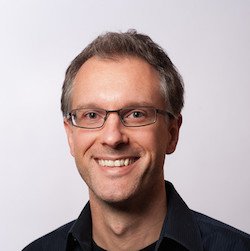
T. Florian Jaegerfjaeger@bcs.rochester.edu[personal homepage]
I am interested in how production and comprehension complexity (due to locality; expectation) influences speakers' choice in language variation. I use psycholinguistic experimentation and corpus-based statistical modeling to investigate whether/to what extent speakers use prosodic and syntactic cues to make unexpected information easier to process (predictability; information structure; common ground), and to which extend this is done for their addressees (audience design).

Postdocs

Neal Snider (BCS, Ling)nsnider@bcs.rochester.edu[personal homepage]
My research investigates the units of representation used in linguistic knowledge. There is increasing evidence that knowledge of the probability distributions of multi-word units and structures is a pervasive aspect of linguistic processing. This hypothesis predicts that there should be significant similarities between lexical and syntactic processing since there is no qualitative difference between the units involved. My research provides evidence that syntactic priming is affected by prime predictability and prime-target similarity in a manner like lexical priming, but is not similarly affected by prime neighborhood density when density is measured with the distribution of constructions in which the prime verb occurs. I am also involved in a project (with Inbal Arnon) that gives evidence that retrieval is sensitive to the exact frequencies of units as long as 4 words, independent of the predictability of the smaller chunks that make them up. This shows that storing multi-word units of this size could be basic component of linguistic knowledge. I am also interested in how predictability (both inherent and derived from the discourse) may aid resolution of verb phrase ellipsis. Primary advisor: Jeff Runner.

Grad students

Meredith Brown (BCS)mbrown@bcs.rochester.edu[personal homepage]
My research investigates the role of discourse factors in word order variation, and the consequences of this word order variation for on-line comprehension. I am combining behavioral experiments with corpus-based methods to study the extent to which corpus statistics align with comprehension preferences.
Judith Degen (BCS)jdegen@bcs.rochester.edu[personal homepage]
My research investigates phenomena at the semantics/pragmatics interface. My current focus lies on the processing of scalar implicatures, but I am more generally interested in how speakers and hearers make use of information about the discourse context - especially of each others' intentional states - in comprehension and production. My work combines behavioral, corpus, and formal linguistic methods.
Maryia Fedzechkina (BCS)mfedzechkina@bcs.rochester.edu [personal homepage]
I am interested in the role of processing preferences in language acquisition. I use a combination of computational and behavioral methods to investigate the extent to which processing biases affect language acquisition.
Alex Fine (Ling, BCS)afine@bcs.rochester.edu[personal homepage]
I’m a second-year graduate student in BCS and Linguistics. I am interested in how the syntax of natural languages is represented and processed. In the HLP lab, I would like to explore the hypothesis that the syntactic properties of languages reflect general principles of processing efficiency.
Austin Frank (BCS)afrank@bcs.rochester.edu[personal homepage]
The overarching question behind my research projects is "Why do we say what we say the way that we say it?" I'm not so much interested in what is said as in how the speaker arrived at that particular manner of expressing the thought. This leads me to look at many levels of language production, from utterance planning through articulation. My work combines behavioral, corpus, and computational methods, often within the same project. I have ongoing work investigating:
  • speakers' strategies in utterance planning;
  • the nature of form-based representations in the mental lexicon; and,
  • the use of auditory feedback and linguistic knowledge in articulatory planning and monitoring.
Celeste Kidd (BCS)ckidd@bcs.rochester.edu[personal homepage]
I am interested in how high-frequency word sequences and collocations play a role in language acquisition, production, and processing. I use a combination of behavioral and corpus-based methods to assess to what degree speakers 'chunk' frequent word combinations and what aspects of articulatory planning might be unit-based.
Natalie Klein (BCS)nklein@bcs.rochester.edu[personal homepage]
My research interests mostly have to do with discourse, reference, and expectation in language processing. I am curious about how information in discourse and the environment influences things like word order, choice of referential expression, and disambiguation.
  • Ongoing work with Greg Carlson, Mike Tanenhaus, Rachel Sussman, and Whitney Gegg-Harrison involves the online interpretation of weak definite NPs, suchas "Bill heard about the riot on the radio, and Mary did too," where intuitively they must have heard about the same unique riot but not necessarily on the same radio, despite the definite determiner.
  • Work with Mary Hare and Dave Race investigates the effects of context on expectations about verb sense when agents are paired with their dispreferred verb senses, as in "The lifeguard saved ten dollars at a sale."
  • Work with Dan Grodner and Katie Carbary has been examining the online calculation of scalar implicatures.
  • With Florian Jaeger and Roger Levy, I have begun work on Chinese classifiers and am investigating situations where either a generic or a more specific classifier can be used to see what factors correlate with classifier choice in the Chinese Treebank corpus. A related study is examining the influence of those choices on reading times.
Matt Post (CS)post@cs.rochester.edu[personal homepage]
My main research focus is the use of syntax to improve machine translation quality. I am especially interested in the manner and extent to which syntax-based language models can help achieve this task, and how such models might be learned from raw, unannotated text.
Ting Qian (BCS)ting.qian@rochester.edu[personal homepage]
The big question that underlies my research interest is: can all phenomena of language use be explained by a rational account? If not, what may explain the “irrational” decisions that speakers/listeners make? This includes investigations of at least the following three questions:
  • What aspects of human language use can be explained as rational choices? (e.g. lexical, syntactic choices)
  • What happens when speakers/listeners make a seemingly irrational decision?
  • Presumably human speakers are rational in general, but are they equally rational? (e.g. should a difference in rationality be accountable for difference in linguistic performance between 1st and 2nd language users?)
I mainly use computational methods to build language models and perform simulations, and regression methods to analyze resulting data.

Visiting Grad Students

Lindsay Butler (BCS)lkbutler@email.arizona.edu[personal homepage]
The major objective of my research is to investigate the relationship between structure and meaning in language, especially with respect to understudied, non-Indo-European languages, like Yucatec Maya (Mayan; Mexico), Shiwilu (Kawapanan; Peru) and Aghem (Grassfields Bantu; Cameroon). I am currently involved in the field-based psycholinguistics project on sentence production in Yucatec Maya. In this project, we are using language production tasks to investigate the factors that affect word order variation.
Alice Lemieux (BCS)lemieux@uchicago.edu[personal homepage]
Lorem ipsum dolor sit amet, consectetur adipiscing elit. Suspendisse cursus libero sed urna malesuada ut gravida turpis dictum. Quisque ultrices condimentum porta. Vestibulum sed risus magna. Quisque id justo nunc, et interdum enim. In varius blandit risus, at mollis felis adipiscing a. Fusce mattis ultrices diam a vehicula. Sed vitae elit sed velit interdum fermentum. Donec vehicula purus non augue laoreet volutpat. Sed tempus pharetra mi vitae lobortis. Maecenas eget leo a sapien consectetur feugiat id at ante.